Tahini vs Chinese Sesame Paste: What’s The Difference?
If you’ve ever compared two similar jars and wondered about tahini vs Chinese sesame paste, you’re not alone. While they both come from sesame seeds, their flavor, texture, and best uses are quite different.
Knowing the difference between Chinese sesame paste and tahini helps you choose the right one for your recipe, whether you’re making a creamy dressing, a smooth dip, or a rich noodle sauce.
Tahini vs Chinese Sesame Paste: A Quick Comparison Before we get into the details, here’s a quick side-by-side look at the difference between Chinese sesame paste and tahini:
Seeds Used
Roasting Level
Color
Flavor
Texture
Culinary Origin
Common Uses
Aroma
Note: This table covers the general differences, but flavor and consistency can vary by brand and how the paste is made.
What Is Tahini?
Tahini, sometimes spelled tahina or tahin, is a Middle Eastern condiment made from sesame seeds that are lightly toasted and ground into a smooth, silky paste. Good tahini is usually pale blonde, mild, and nutty, with a slight bitterness.
Many tahini varieties are blended until smooth and pourable, making them easy to use in dressings, dips, and sauces. Others use whole sesame seeds for a slightly thicker texture and more robust flavor.
How It’s Made
- Hulling – The outer husks of white sesame seeds are removed, leaving ivory-colored kernels.
- Light roasting – The seeds are lightly toasted to bring out a subtle nutty aroma. Too much roasting can make tahini taste bitter.
- Grinding – The warm seeds are milled until they release their natural oils and turn into a creamy paste. Some producers add a small amount of neutral oil for a more pourable consistency.
Common Uses
Tahini’s mild flavor makes it easy to use in all kinds of recipes. It is a key ingredient in classic Middle Eastern dips such as hummus and baba ghanoush. It also works well in salad dressings, cookies, cakes, and smoothies.
Because it is pourable, tahini can also be drizzled over roasted vegetables or grain bowls. Its high fat content (mostly unsaturated) also makes it a satisfying addition to vegan desserts.
Ready to try tahini for yourself?
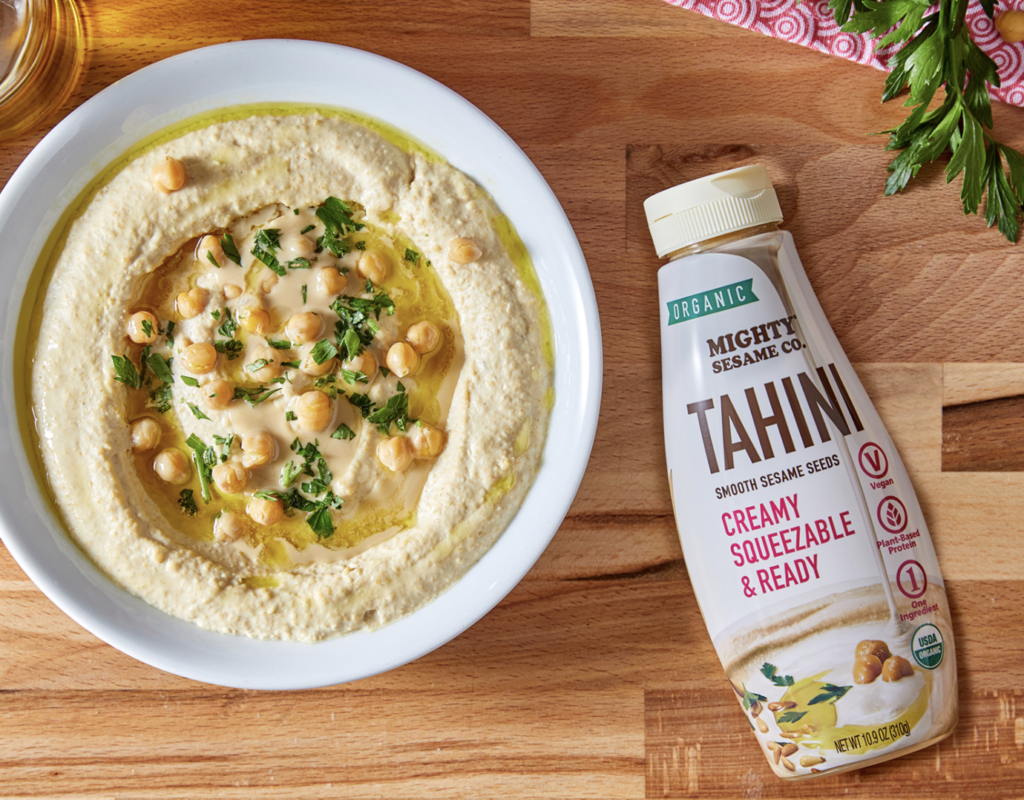
Mighty Sesame Organic Tahini is smooth, ready to use, and easy to drizzle into dressings, dips, and everyday meals. Find it in the nut butter or spreads aisle at your local grocery store.
What Is Chinese Sesame Paste?
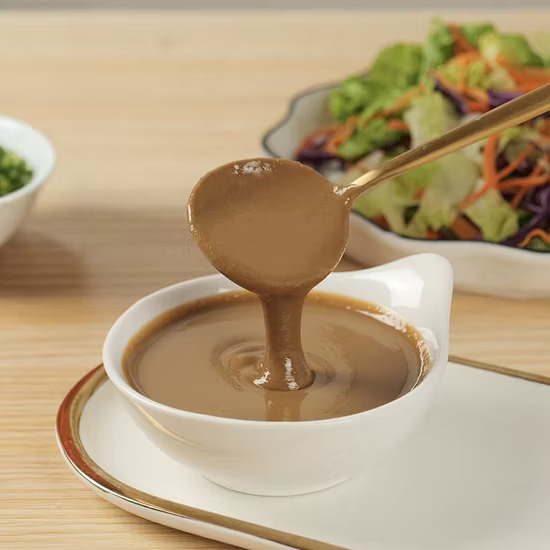
Chinese sesame paste, known in Mandarin as zhī má jiàng (芝麻酱), is typically made from sesame seeds that are roasted until dark and aromatic. Some versions also blend sesame with up to 50 % peanut for a richer taste.
Because the seeds are often left unhulled and roasted longer, the paste ends up darker, thicker, and more intense in flavor.
How It’s Made
- Often made without hulling – This can contribute to a darker color and a more intense, roasted flavor.
- Deep roasting – The seeds are roasted until dark brown. This creates a rich, toasty aroma similar to sesame oil.
- Grinding with oil – The roasted seeds are ground with sesame oil or sometimes soybean or peanut oil. The oil helps create the thick paste.
Uses in Cooking
Chinese sesame paste is widely used in Chinese and Taiwanese cooking, especially in noodle dishes, hot pot sauces, and other savory recipes. Its bold flavor pairs well with ingredients like soy sauce, garlic, and vinegar.
Outside East Asia, similar pastes also appear in Japanese cooking, where they are called neri goma. Because the flavor is so strong, Chinese sesame paste is often thinned with liquid or mixed with other ingredients before serving.
Frequently Asked Questions
Is tahini the same as Chinese sesame paste?
No. Both are made from sesame seeds, but they are not the same product. Tahini is usually lighter in color, smoother in texture, and milder in flavor, while Chinese sesame paste is darker, thicker, and more deeply roasted. Some Chinese sesame paste products may also include peanuts, which can further change the flavor and ingredient profile.
Which is healthier, tahini or Chinese sesame paste?
Neither is automatically healthier. It depends on the brand, ingredient list, and how processed the product is. Plain tahini often has a simpler ingredient list, while some Chinese sesame paste products include added oil or peanuts. The best way to compare them is to check the label on the specific jar you are buying.
Some Final Thoughts
Understanding the difference between Chinese sesame paste and tahini can help you get better results in the kitchen. Tahini’s light, pourable texture and mild flavor work beautifully in Middle Eastern dips and desserts, while Chinese sesame paste brings deep, roasted notes to noodle dishes and savory sauces.
