Is Tahini Acidic? Let’s Set the Record Straight
Tahini is a creamy paste made from ground roasted sesame seeds, with a rich, nutty flavor that’s a staple in Middle Eastern cuisine.
Many people wonder whether tahini is acidic and whether it’s suitable for those managing acid reflux or GERD. To answer this, we need to look at tahini’s pH level, how foods are classified as acidic or alkaline, and how fats and fiber affect digestion.
This article will clarify these points, debunk myths, and provide practical advice on enjoying tahini without aggravating heartburn.
Is Tahini Acidic?
Tahini’s pH
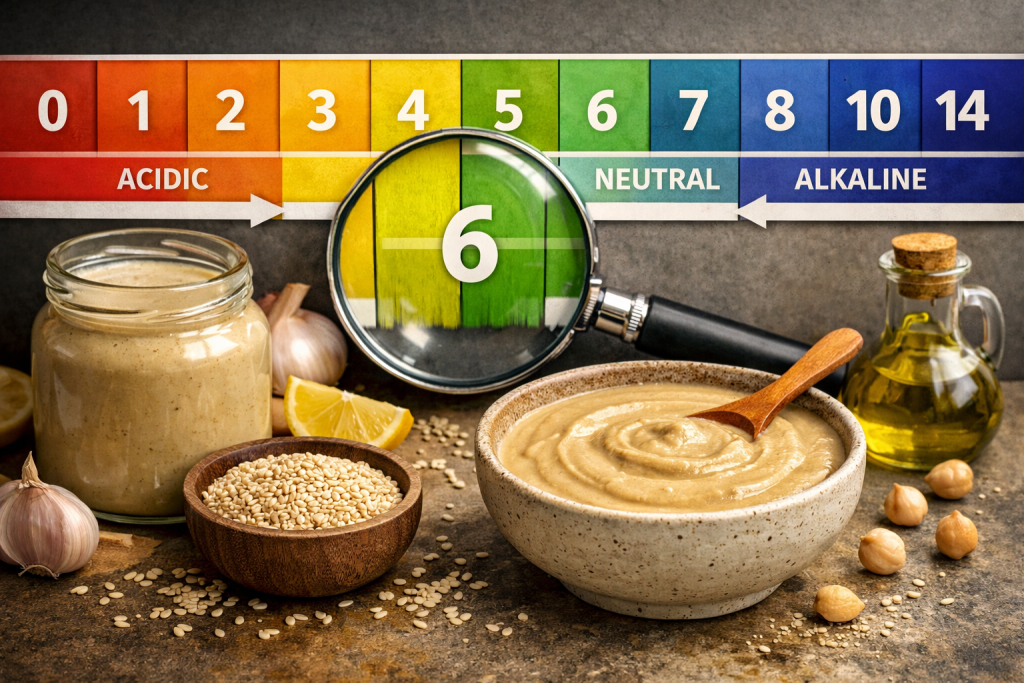
Tahini isn’t highly acidic like lemons or vinegar. In fact, it typically has a pH of around 5.9, which makes it only slightly acidic. Since pure water has a neutral pH of 7, foods with a pH below this are considered “acidic.” However, a pH of 5.9 is only slightly acidic, similar to many cooked vegetables.
Acid-/Alkaline food lists
Some online charts group foods by their “acid-forming” or “alkaline-forming” residue after digestion. Tahini is sometimes listed under “acidifying nuts & butters” and other times under “alkaline sprouts and seeds.”
These lists are based on theories that don’t always reflect how foods behave in the body. In everyday terms, they can be confusing and inconsistent, which is why it’s more helpful to focus on how food makes you feel.
Bottom line on acidity
Tahini’s measured pH shows it’s slightly acidic, but this doesn’t mean it will make your body acidic. For those following specific diets, it’s essential to note that tahini appears on both acidifying and alkaline lists, depending on the source. A more important consideration is how tahini’s fats and fiber affect digestion and reflux.
Is Tahini Good for Acid Reflux?
Acid reflux and GERD occur when stomach acid flows up into the esophagus, and diet can make symptoms better or worse. High-fat foods can take longer to digest and may trigger reflux symptoms for some people. Spicy, acidic, and highly processed foods are also common triggers.
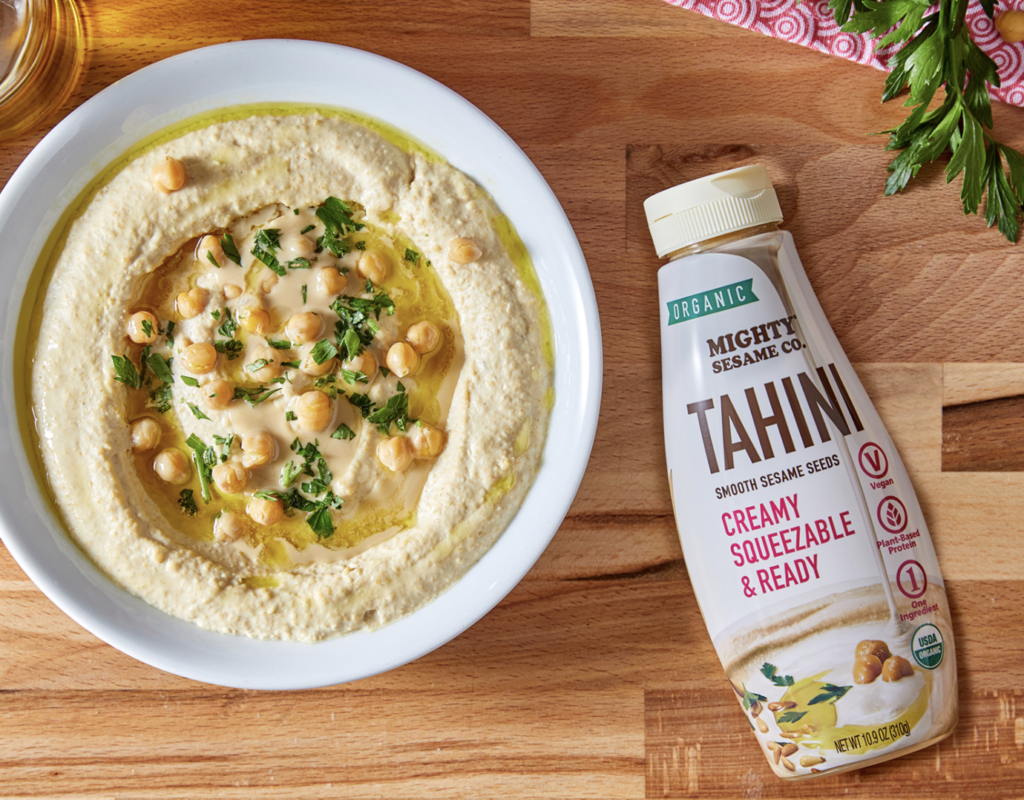
Tahini is high in fat, with about 8 grams per tablespoon. However, most of this fat is monounsaturated and polyunsaturated, with only 2 grams of saturated fat per 2-tablespoon serving. Unsaturated fats support heart health, and research suggests that sesame seeds contain phytosterols that can lower cholesterol.
Still, the high fat content can delay stomach emptying, making the relationship between tahini and acid reflux dependent on portion size and individual tolerance.
What GERD experts recommend
Experts suggest limiting foods high in fat, salt, and spice, as they can worsen reflux. However, they recommend replacing saturated fats with plant-based oils like olive or sesame oil and nuts and seeds.
Sesame oil, nuts, and seeds are part of a heart-healthy diet and are generally better tolerated when eaten in moderation. Nuts and seeds also supply fiber, which can help prevent overeating. Tahini can be enjoyed by people with GERD, as long as they use it in moderation.
Is Tahini GERD Friendly?
Potential challenges
Some individuals may find tahini harder to digest due to its fat and fiber content. While healthy, these components can slow gastric emptying in sensitive individuals, potentially triggering reflux symptoms when consumed in excess. Tahini is also calorie-dense and may not be suitable for everyone in large portions.
Possible benefits
Tahini is naturally gluten-free and minimally processed, making it a versatile option for many diets. Its monounsaturated and polyunsaturated fats may support nutrient absorption and heart health, and it contributes a small amount of dietary fiber, which can aid digestive health. However, tahini’s impact on reflux symptoms may vary from person to person.
Moderation and individual tolerance
Based on general dietary guidance and resources, those managing acid reflux or GERD should monitor their individual tolerance to high-fat foods like tahini. Starting with a small amount and avoiding consumption near bedtime may help reduce symptoms. Combining tahini with high-fiber, low-acid foods like oats, bananas, or leafy greens may further buffer its effects. Avoid pairing it with large amounts of lemon juice, chili flakes, or garlic, as these can trigger reflux.
Note: If reflux symptoms are frequent or severe, it may help to seek guidance from a healthcare professional before making significant changes to one’s diet.
Why Choose Mighty Sesame Tahini?
Mighty Sesame’s organic tahini is made from 100% roasted, hulled sesame seeds with no added oils, preservatives, or salt. Its single-ingredient purity means it contains zero cholesterol and is naturally gluten-free and vegan.
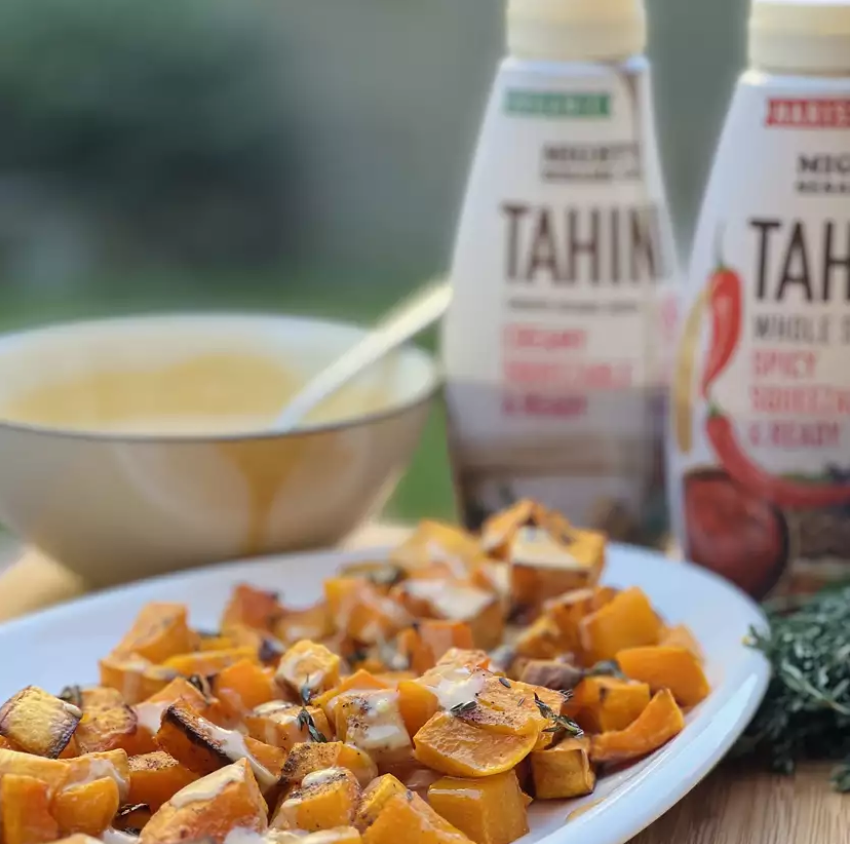
Our patent-pending squeeze bottle makes it easy to portion out controlled amounts, perfect for those monitoring fat intake for reflux. Mighty Sesame sources high-quality Ethiopian sesame seeds and roasts them to bring out a rich, balanced flavor without bitterness.
Explore our range of products today, and use our store locator to find Mighty Sesame near you.
Bottom Line
Tahini is slightly acidic, but whether it’s labeled “acid-forming” or “alkaline-forming” depends on the source. More importantly, tahini is rich in unsaturated fats, fiber, and plant compounds that support overall wellness and heart health.
For people with acid reflux or GERD, the fat content is the main consideration; small amounts of tahini can be part of a reflux-friendly diet when paired with alkaline foods and eaten in moderation.
Always listen to your body and adjust portions accordingly. With mindful use, tahini can add flavor and nutrition to your meals without upsetting your stomach.
