Is Tahini Healthy? Check Its Nutrition, Calories & Benefits
Tahini—the smooth paste made from ground sesame seeds—has been a kitchen favorite across the Mediterranean and Middle East for generations. It’s what gives hummus its creamy texture, adds depth to salad dressings, and works just as well stirred into a smoothie or drizzled over roasted vegetables.
But once you start reading the label, the same question usually comes up: is tahini healthy, or is it just another calorie-heavy spread?
The short answer: tahini can absolutely fit into a balanced diet. If you’re wondering if tahini is good for you, it offers a mix of unsaturated fats, plant-based protein, fiber, and naturally occurring vitamins and minerals. Like any energy-dense food, portion size matters—but it can still be a really enjoyable, versatile part of everyday meals.
What Is Tahini and What’s Actually in It?
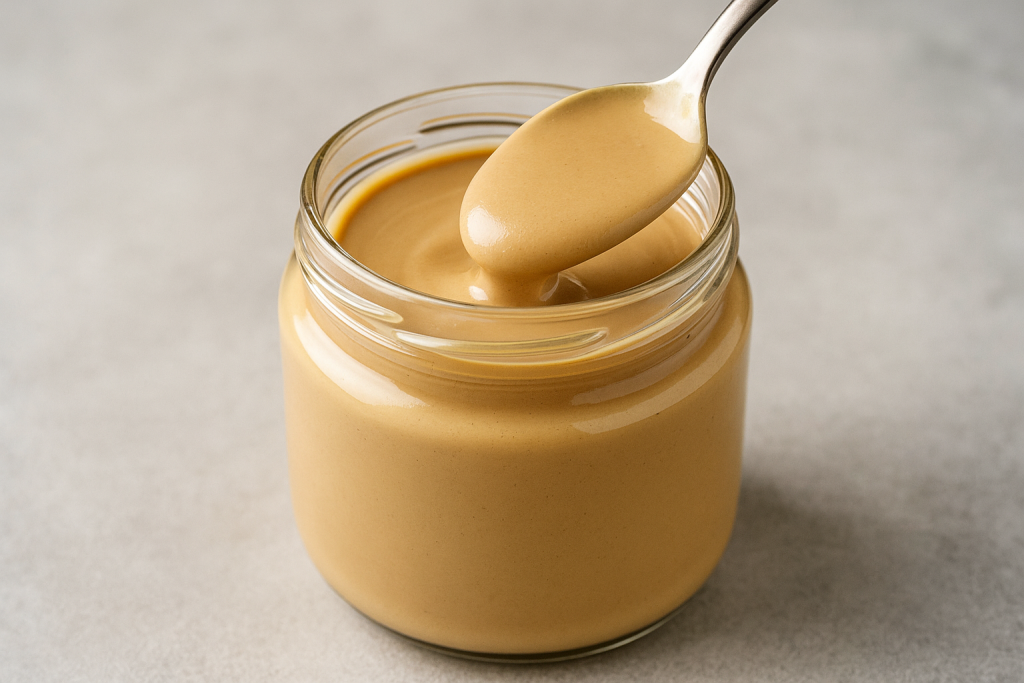
At its core, tahini is simply ground sesame seeds blended into a smooth, creamy paste. Some brands add extras, but Mighty Sesame keeps things simple—just high-quality sesame seeds, nothing unnecessary.
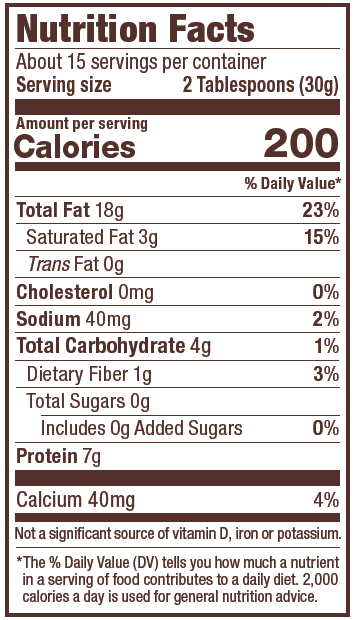
Because sesame seeds are naturally nutrient-rich, tahini delivers a concentrated mix of healthy fats, plant protein, fiber, and minerals. According to USDA FoodData Central, one tablespoon (about 15 grams) contains roughly:
- 89 calories
- 2.6 grams of protein
- 3 grams of carbohydrates
- 8 grams of fat
- About 1 gram of fiber
It also contains naturally occurring minerals like copper, selenium, phosphorus, magnesium, and manganese. The exact amounts can vary a little depending on the sesame seeds and how the tahini is made.
Altogether, this tahini nutrition profile is what makes even a small spoonful feel both flavorful and nourishing.
How Many Calories Are in Tahini?
Since sesame seeds are naturally high in healthy fats, tahini is more calorie-dense than many vegetable-based dips or spreads. Here’s a quick breakdown:
Serving Size | Calories |
1 teaspoon (5g) | 30 |
1 tablespoon (15g) | 89 |
1/4 cup (60g) | 356 |
100g | 595 |
These are averages and can vary slightly by brand.
That said, the calorie content doesn’t make tahini “bad”—it simply means a little goes a long way. What really matters is how it fits into your overall diet and what you pair it with.
How Does Tahini Compare to Other Spreads?
Spread | Calories per tbsp | Fat (g) | Protein (g) |
Tahini | 89 | 8 | 2.6 |
Peanut butter | 96 | 8 | 4 |
Almond butter | 98 | 9 | 3 |
Butter | 102 | 12 | 0 |
Note: Values are approximate and may vary by brand.
In other words, tahini sits right alongside other nut and seed butters in terms of calories. The key difference is its fat profile—it’s naturally rich in unsaturated fats, which are common in plant-based foods.
What Are the Main Sesame Tahini Benefits?
Many of the well-known tahini benefits come from sesame seeds themselves. They provide healthy fats, plant protein, fiber, minerals, and natural plant compounds called lignans.
Research on sesame and sesame foods has explored possible links to heart health, blood sugar balance, and inflammation. The results are interesting, but not always consistent, and not every study focuses specifically on tahini.
1. Naturally rich in healthy fats
To start with, tahini is mostly made up of unsaturated fats—the same type found in foods like nuts, seeds, and olive oil.
Some research suggests sesame foods may support heart health markers as part of a balanced diet. However, findings are mixed, so it’s best to think of tahini as one helpful piece of an overall healthy eating pattern—not a solution on its own.
2. Contains naturally occurring plant compounds
In addition, sesame seeds contain lignans such as sesamin and sesamolin, which have been studied for their antioxidant properties.
While research is still ongoing, the simple takeaway is that tahini naturally brings along plant compounds alongside its fats, protein, and minerals.
3. An easy way to add nutrients to meals
On top of that, tahini provides small amounts of fiber and minerals like magnesium, phosphorus, copper, and selenium.
It really shines when paired with other nutrient-rich foods like vegetables, beans, lentils, and whole grains. For example, you can drizzle it over roasted vegetables, stir it into hummus, or add it to grain bowls for extra flavor and creaminess.
4. Fits into balanced eating patterns
Because tahini is naturally low in carbohydrates and contains a mix of fat, protein, and fiber, it can help make meals feel more satisfying.
Some studies on sesame foods suggest possible links to steadier blood sugar levels, especially in people with type 2 diabetes. However, more research is needed, and tahini shouldn’t be relied on as a way to manage blood sugar on its own.
As always, if you’re managing a health condition, it’s best to follow your healthcare provider’s advice.
5. Plant-based protein and everyday minerals
Finally, one tablespoon of tahini provides around 2.5–3 grams of plant-based protein.
It also contributes small amounts of minerals that support everyday body functions. While it won’t meet your daily needs on its own, it’s a useful addition to a varied diet and works well in sauces, dressings, snacks, and plant-based meals.
The Common Misconceptions About Tahini
Because tahini is quite energy-dense, it’s often misunderstood:

“Tahini causes weight gain.”
In reality, weight changes come down to overall eating habits, not one ingredient. Portion size is what really matters.
“Tahini has added sugar.”
Pure tahini is just sesame seeds. Always check the label, but good-quality tahini doesn’t need added sugar.
“High fat means unhealthy.”
Tahini is rich in unsaturated fats, the kind commonly found in plant-based foods.
“You need a lot to taste it.”
Even a small spoonful adds a strong, nutty flavor and creamy texture.
If you want a lighter consistency, you can whisk tahini with water and lemon juice to make a smooth, pourable sauce.
Learn How to Add Tahini to Your Diet
Thanks to its creamy, nutty flavor, tahini is easy to work into everyday cooking:
- Dressings and dips: Mix with lemon juice, garlic, and water for a quick sauce
- Breakfast bowls: Stir into oatmeal, yogurt, or smoothies
- Baking: Add to cookies, brownies, or muffins for extra depth
- Spreads: Enjoy on toast with fruit, honey, or jam
- Bowls and veg: Drizzle over roasted vegetables, grain bowls, or salads
- Plant-based meals: Use as a creamy base for sauces and dressings
Need ideas? Explore our tahini recipes for simple inspiration across every meal of the day.
How Should You Store Tahini?
Storage can vary slightly depending on the product, so it’s always worth checking the label.
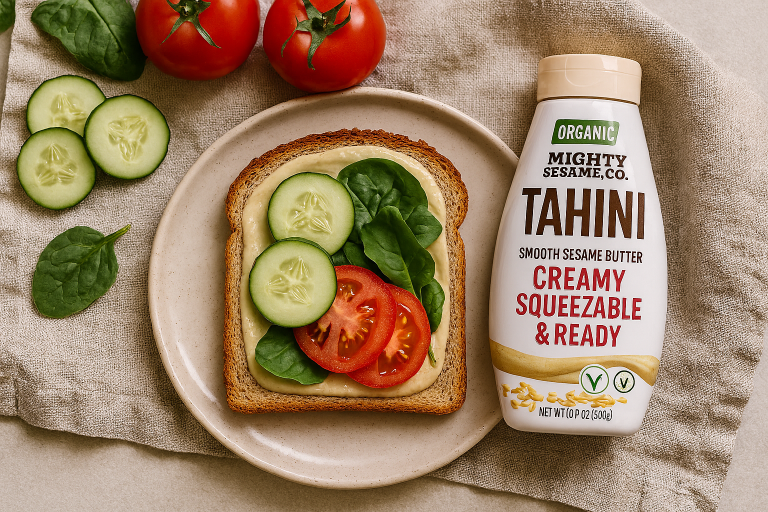
Mighty Sesame’s Organic Tahini Squeeze Bottle does not need refrigeration after opening. Just keep it in a cool, dry place and give it a shake before using.
If you prefer a thicker texture, you can refrigerate it—but it’s optional.
For more details, visit our tahini FAQ.

The Potential Downsides and Precautions
Tahini is simple and wholesome, but there are a couple of things to keep in mind.
Calorie density
First, tahini is rich and satisfying, but also energy-dense. A small amount goes a long way, so portion awareness can help if you’re watching your intake.
Sesame allergy
It’s also important to note that sesame is a major food allergen. Anyone with a sesame allergy should avoid tahini and any sesame-based products.
Always read ingredient labels carefully if you have allergies or sensitivities.
FAQ: Tahini Nutrition and Health
Tahini can fit into a weight-conscious diet when eaten in moderation. Its fat, protein, and fiber can help keep meals satisfying, but portion size still matters. No single food drives weight loss—overall habits do.
Both are nutritious in their own way. Tahini offers minerals like copper and selenium, while peanut butter usually has more protein per serving. Neither is “better” for everyone—it really comes down to preference and nutritional needs.
Yes, most people can enjoy tahini regularly as part of a balanced diet. Just keep an eye on portions, especially if you’re using it in multiple meals.
There’s no evidence that tahini raises cholesterol. It contains mostly unsaturated fats, which are common in plant-based foods. Some research on sesame foods suggests possible heart-friendly effects, but results vary, so it’s best enjoyed as part of an overall balanced diet.
So, Is Tahini Healthy? The Final Verdict..
For most people, yes—tahini can be a tasty, nourishing part of everyday eating.
In fact, it brings together healthy fats, plant protein, fiber, and naturally occurring nutrients in one simple ingredient. The main thing to be mindful of is portion size, since it’s quite rich and satisfying.
Rather than thinking of it as something to limit or label as a “superfood,” it’s better seen as a versatile kitchen staple that adds flavor, creaminess, and nutrition to everything from salads and grain bowls to smoothies and desserts.
Ready to use more tahini in your kitchen? Explore the full range of Mighty Sesame tahini products, including the Organic Tahini Squeeze Bottle. Then find Mighty Sesame products near you today!
